
Is a ₹12 Lakh Salary Really Tax-Free in 2026? Yes — But Two Myths Will Cost You
It genuinely is tax-free. The internet is still lying to you about how — and the lie has a price.
Short answer: Yes. For FY 2025-26, a salaried person earning up to ₹12.75 lakh pays zero income tax under the new regime — that’s ₹12 lakh of taxable income after the ₹75,000 standard deduction. But it is a rebate, not a magic tax-free slab, and that one distinction is where two very popular myths quietly empty people’s pockets.
First, the part that’s actually true
Under the new regime, income up to ₹12 lakh attracts a Section 87A rebate of up to ₹60,000 — which wipes the tax to nil. Add the ₹75,000 standard deduction that salaried people get, and a salary of ₹12.75 lakh lands at exactly ₹12 lakh of taxable income. Zero tax. No 80C gymnastics, no rent receipts, no insurance you didn’t want. For most salaried Indians under ₹12.75 lakh, the new regime isn’t just simpler — it’s a clean win.
So far, so good. Now the two lies.
Myth 1: “₹12 lakh is a tax-free slab, so my first ₹12 lakh is always safe”
It isn’t a slab. It’s a rebate — a discount the government hands you only if your total taxable income stays at or below ₹12 lakh. The moment you cross that line, the discount vanishes in full. It does not shrink politely; it leaves the building.
Earn ₹15 lakh and you don’t pay tax “only on the ₹3 lakh above ₹12.” You pay the regular slab tax on everything from ₹4 lakh upward:
| Taxable income (new regime) | Rate |
|---|---|
| Up to ₹4,00,000 | Nil |
| ₹4,00,001 – ₹8,00,000 | 5% |
| ₹8,00,001 – ₹12,00,000 | 10% |
| ₹12,00,001 – ₹16,00,000 | 15% |
| ₹16,00,001 – ₹20,00,000 | 20% |
| ₹20,00,001 – ₹24,00,000 | 25% |
| Above ₹24,00,000 | 30% |
The person who thinks “₹12 lakh is always free” budgets for a tax bill that doesn’t match reality the day they get a raise. The slab table doesn’t care about your feelings, and neither does the rebate.
Myth 2: “Earn one rupee over ₹12 lakh and a tax bomb goes off”
This is the opposite panic, and it’s just as wrong. People hear the rebate “disappears” above ₹12 lakh and imagine that ₹12,01,000 of income triggers tax on the whole amount — a sudden bill of tens of thousands for earning a thousand more.
That bomb exists only on WhatsApp. The government actually defused it, with something called marginal relief: between ₹12 lakh and roughly ₹12.75 lakh, your tax is capped at about the amount you earned over ₹12 lakh. Cross the line by ₹10,000 and you pay roughly ₹10,000 — not a five-figure penalty. The cliff everyone fears is, in this narrow band, a gentle ramp.
The real danger was never the rupee that takes you over ₹12 lakh. It’s not knowing that the rebate was a one-time gift the slab table takes back the instant you stop being eligible.
So who should actually worry?
Not the person at ₹11 lakh — they’re fine. Not the person at ₹12.2 lakh — marginal relief has their back. The person who gets hurt is the one sitting at ₹13–16 lakh who still half-believes their “first ₹12 lakh is free,” and is quietly under-budgeting their tax all year. If that’s you, run your real number through the official calculator before March, not after.
What to do
- Under ₹12.75 lakh salary? Pick the new regime and stop overthinking it. You owe nothing.
- Just over ₹12 lakh? Don’t panic-invest to “get back under” — marginal relief already protects you up to ~₹12.75 lakh.
- Comfortably above ₹12.75 lakh? The rebate is gone. Now it’s the old genuine question — do your deductions (80C, HRA, home loan) beat the new regime’s lower rates? Run both. Then choose.
Take action
Sources
- Income Tax Department — slab rates, new regime FY 2025-26 (incometax.gov.in)
- Finance Act 2025 — Section 87A rebate, new tax regime
- CBDT — marginal relief under the new regime, FY 2025-26
Is ₹12 lakh tax-free for everyone or only salaried people?
Up to ₹12 lakh of taxable income is tax-free under the new regime for any resident individual. Salaried people get to ₹12.75 lakh of salary because the ₹75,000 standard deduction first cuts taxable income down to ₹12 lakh.
If I earn ₹12,01,000, do I lose the whole rebate and pay full tax?
No. That is the myth. Marginal relief caps your tax at roughly the amount you earn above ₹12 lakh, until about ₹12.75 lakh — so you do not fall off a cliff for crossing the line by a little.
Does the ₹12 lakh rebate also apply in the old regime?
No. In the old regime the Section 87A rebate only makes income up to ₹5 lakh tax-free. The ₹12 lakh figure is a new-regime benefit.
I earn ₹15 lakh. Is my first ₹12 lakh still tax-free?
No — and this is the costliest mistake. Once taxable income crosses ₹12 lakh, the rebate disappears entirely. You then pay normal slab tax on income from ₹4 lakh upward, not just on the bit above ₹12 lakh.
Will Lab-Grown Gold Crash the Gold Price? No. Here's What to Check This Dhanteras Instead
Diamonds can be grown in a lab. Gold can't. The real fake-gold risk this Dhanteras is at the jewellery counter, and it takes two minutes to check.
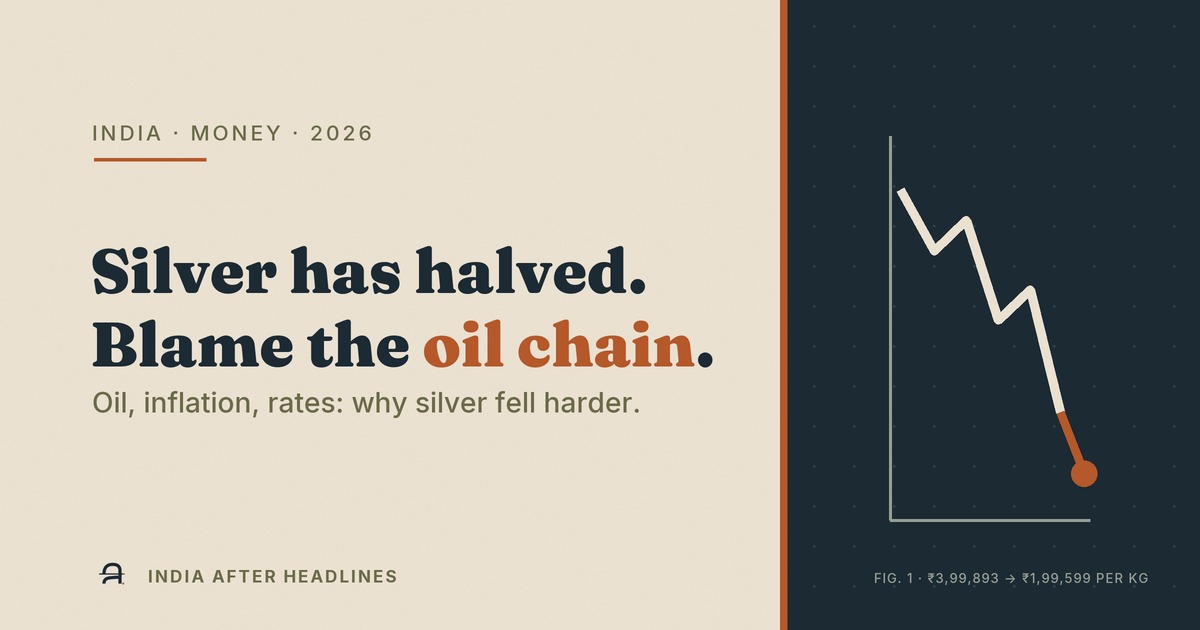
Why Has Silver Halved in 2026? From ₹4 Lakh to ₹2 Lakh a Kilo, Explained
Silver closed at half its January record on 22 October. It wasn't a scam or a collapse in demand for jewellery. It was a chain that started with crude oil.
PSU Bank Stake Sale 2026: Central Bank, UCO, IOB, Punjab & Sind — Is Your FD Safe?
After IDBI, the government wants to sell part of four more banks. That part isn't privatisation, and the legal cover on your deposit never depended on who owns the bank.